

Let’s Talk The Big ‘O’
Orgasms are like a beautifully conducted orchestra—each part of your body playing its own role in creating the ultimate crescendo. And just like in an orchestra, each section plays a vital role in creating a perfect harmony of pleasure. Today, let’s talk about the muscles behind the magic and the different types of orgasms that they play a role in.
Vaginal Ejaculatory Orgasm (Squirting)
The pubococcygeus (PC) muscle plays a key role in contracting during vaginal ejaculatory orgasms, assisting in fluid expulsion from the Skene’s glands (sometimes referred to as the “female prostate”).
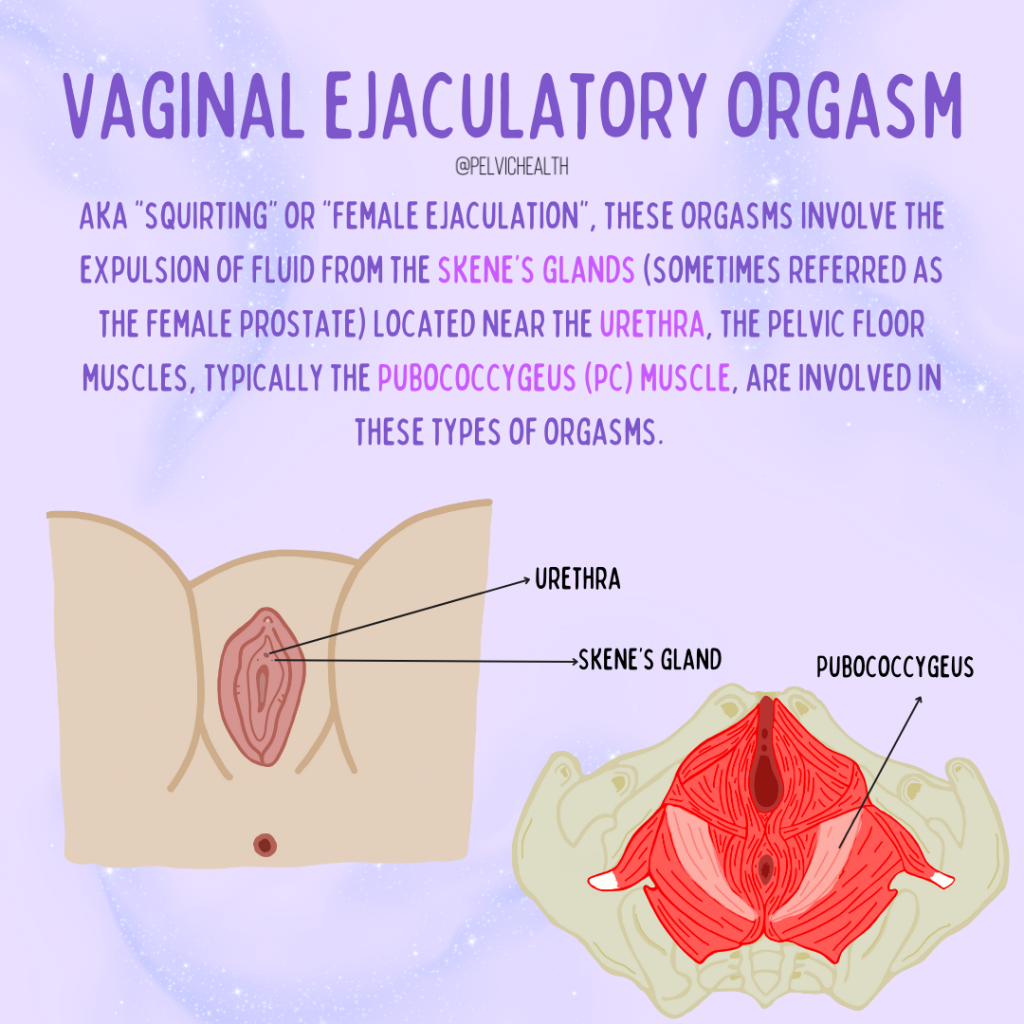
text: AKA “Squirting” or “Female Ejaculation,” these orgasms involve the expulsion of fluid from the skene’s glad (sometimes referred as the female prostate) located near the urethra, the pelvic floor muscles, typically the pubococcygeus (PC) muscle are involved in these types of orgasms.
G-Spot/Vaginal Orgasm
The PC muscle also plays a role in G-spot orgasms, where stimulation of the anterior vaginal wall leads to contractions contributing to the orgasmic response.
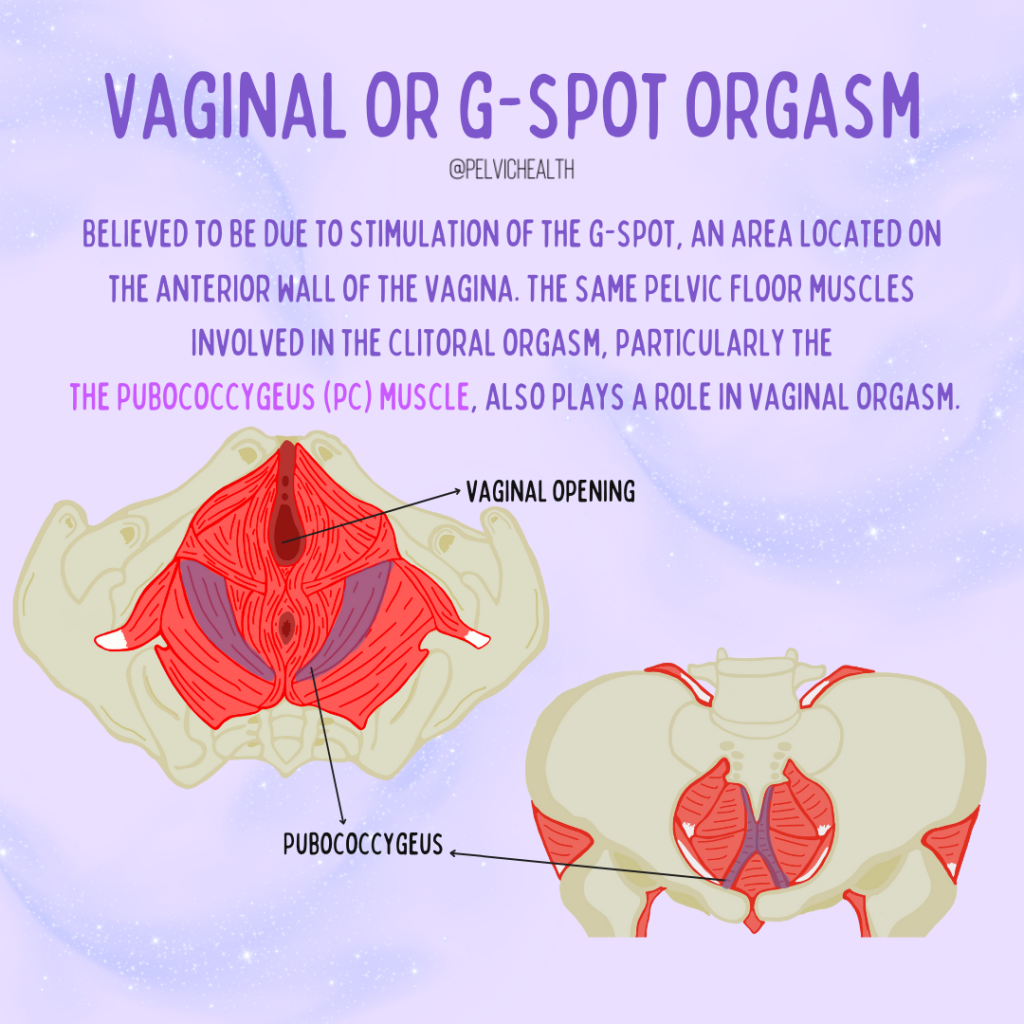
text: believe to be due to stimulation of the g-spot, an area located on the anterior wall of the vagina. The same pelvic floor muscles involved in the clitoral orgasm, particularly the pubococcygeus (PC) muscle, also plays a role in vaginal orgasm.
Cervical Orgasm
The deepest, most resonant note in the symphony! Cervical orgasms involve stimulation of the cervix, activating the myometrium (uterine muscle) and pelvic floor muscles leading to deep, intense contractions. Think of this as the deep, vibrating bass that you feel just as much as you hear.
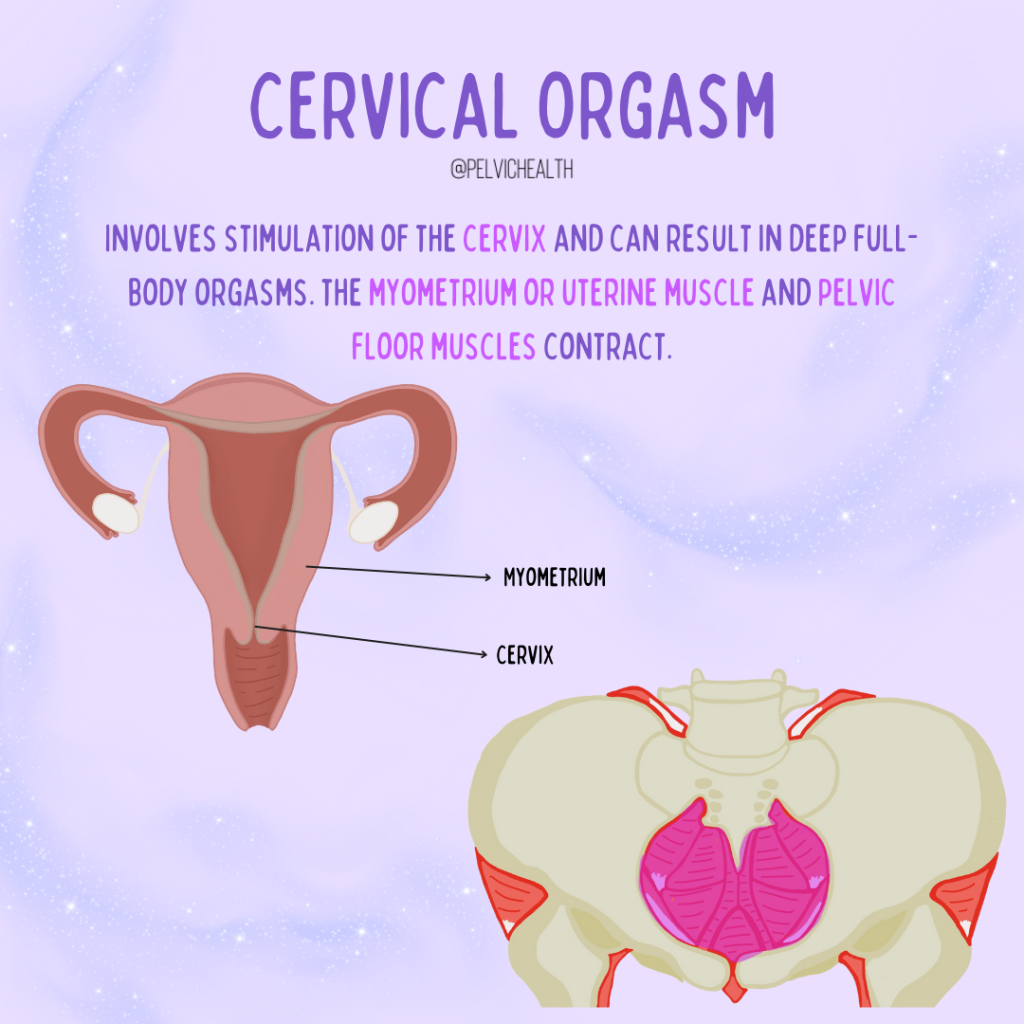
text: involves stimulation of the cervix and can result in deep full-body orgasms. The myometrium or uterine muscle and pelvic floor muscles contract.
Blended Orgasm
The grand symphony of pleasure! Blended orgasms occur when multiple erogenous zones—such as the clitoris and G-spot—are stimulated simultaneously, involving coordinated contractions of the pelvic floor and uterine muscles. This is the whole orchestra playing at once, each section adding to the intensity!
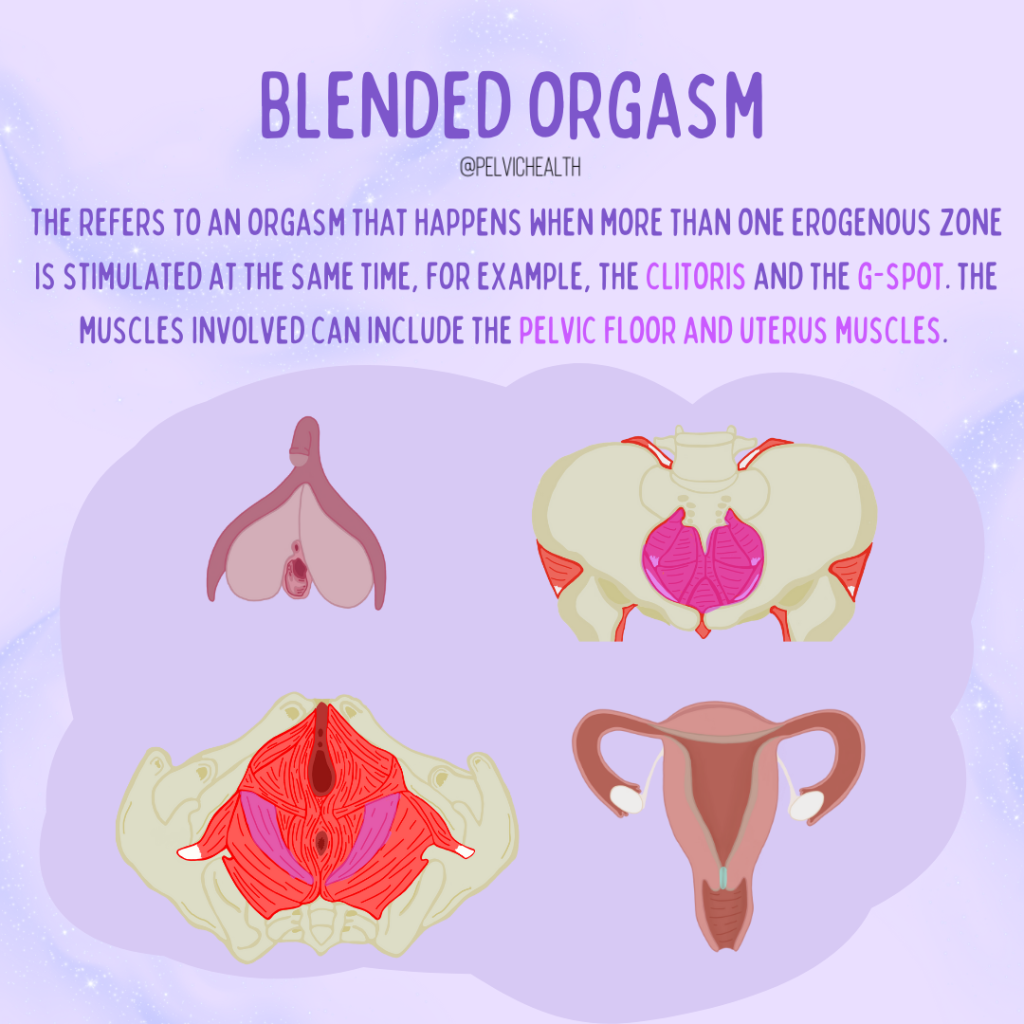
text: refers to an orgasm that happens when more that one erogenous zone is stimulated at the same time, for example the clitoris and the g-spot. The muscles involve can include the pelvic floor and uterus muscles.
Clitoral Orgasm
Clitoral orgasms primarily involve the PC muscle contracting rhythmically in response to direct stimulation of the clitoris. Small but mighty, the clitoris is the lead instrument, carrying the melody of pleasure to a breathtaking finish! Your body is an orchestra of sensations, and understanding how each muscle plays its part can help you fine-tune your pleasure for a masterpiece of orgasmic experiences.
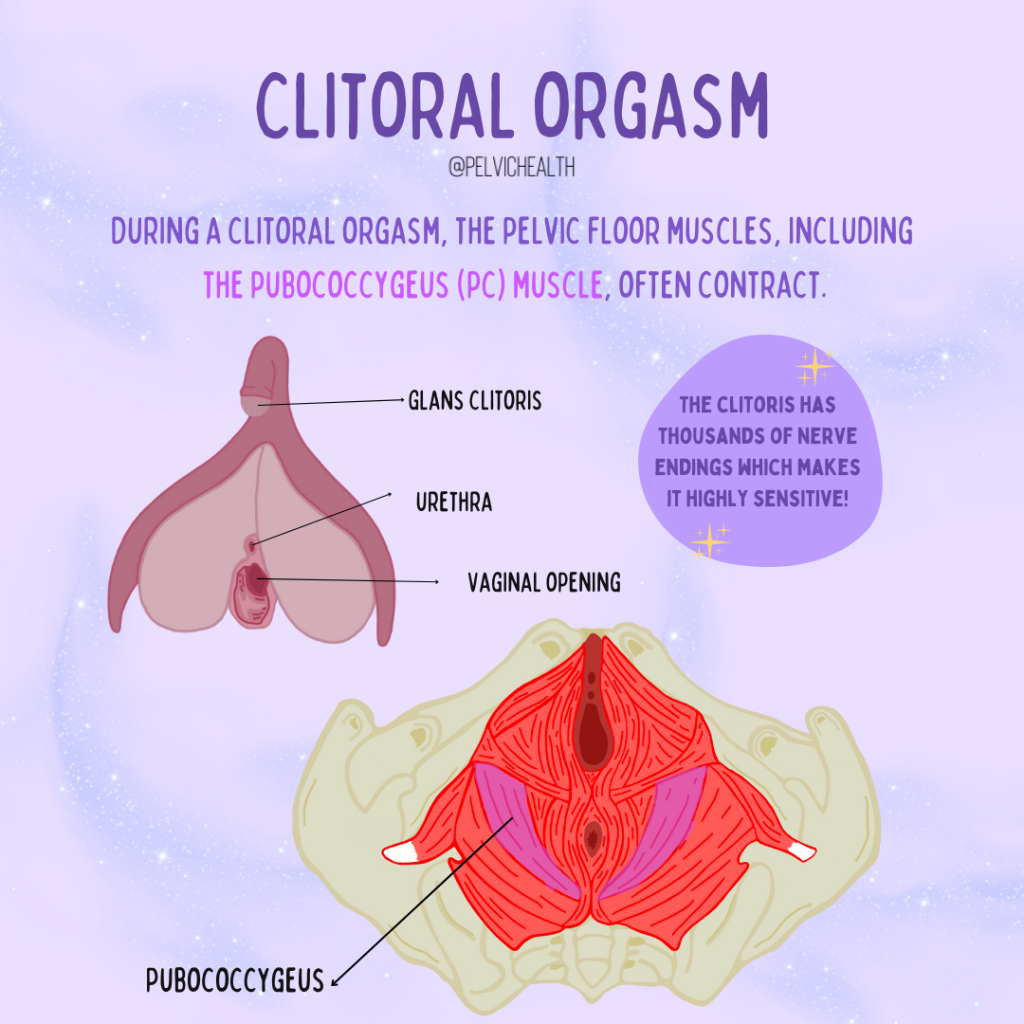
text: during a clitoral orgasm, the pelvic floor muscles, including the pubococcygeus (PC) muscle, often contract. Fun fact: the clitoris has thousand of nerve endings, which makes it highly sensitive!
If you’re wondering if you’re “playing it right” – don’t stress. The best musicians will tell you to just let go and feel the flow. And just like with music, practice makes perfect!
Want to learn more about orgasms? Check out this snippet from a previous blog:
“Also, orgasms should never be painful, nor should they be extremely difficult to achieve. If you’re struggling in this area, it’s worth speaking with a sexual medicine expert. Don’t get me wrong—an orgasm isn’t necessary for a healthy sexual life. There are many ways to maintain sexual wellbeing, even without orgasm. However, if you’ve experienced orgasm before and are now finding it more difficult, painful, or less satisfying, this is something worth addressing.
Orgasms should be enjoyable. There are even numerous benefits to orgasm beyond just sexual pleasure. Orgasms can indicate good cardiovascular health, improve mood, reduce headaches, provide an analgesic effect (pain relief), and enhance sleep quality. The benefits go on and on.”
Resources
Your Pelvic Floor Wants You to Breathe Better – Here’s Why
Įvertinkite straipsnį